Military Commision - Our team developed a ritual before the game. Reggie, Marvin, Gibbs, and I jump into the car at the service entrance or loading dock, then follow our advance team through the corridors and back ways. I often meet with local managers; Take photos with a hundred or so key volunteers and supporters, filled with hugs, kisses and little wishes; And sign books, magazines, baseballs, birth announcements, military commissions and anything else.
In this case, "military commissions" (like birth announcements) means activity, I think. But I'm not sure what it is. Is it "talk about military issues"?
Military Commision
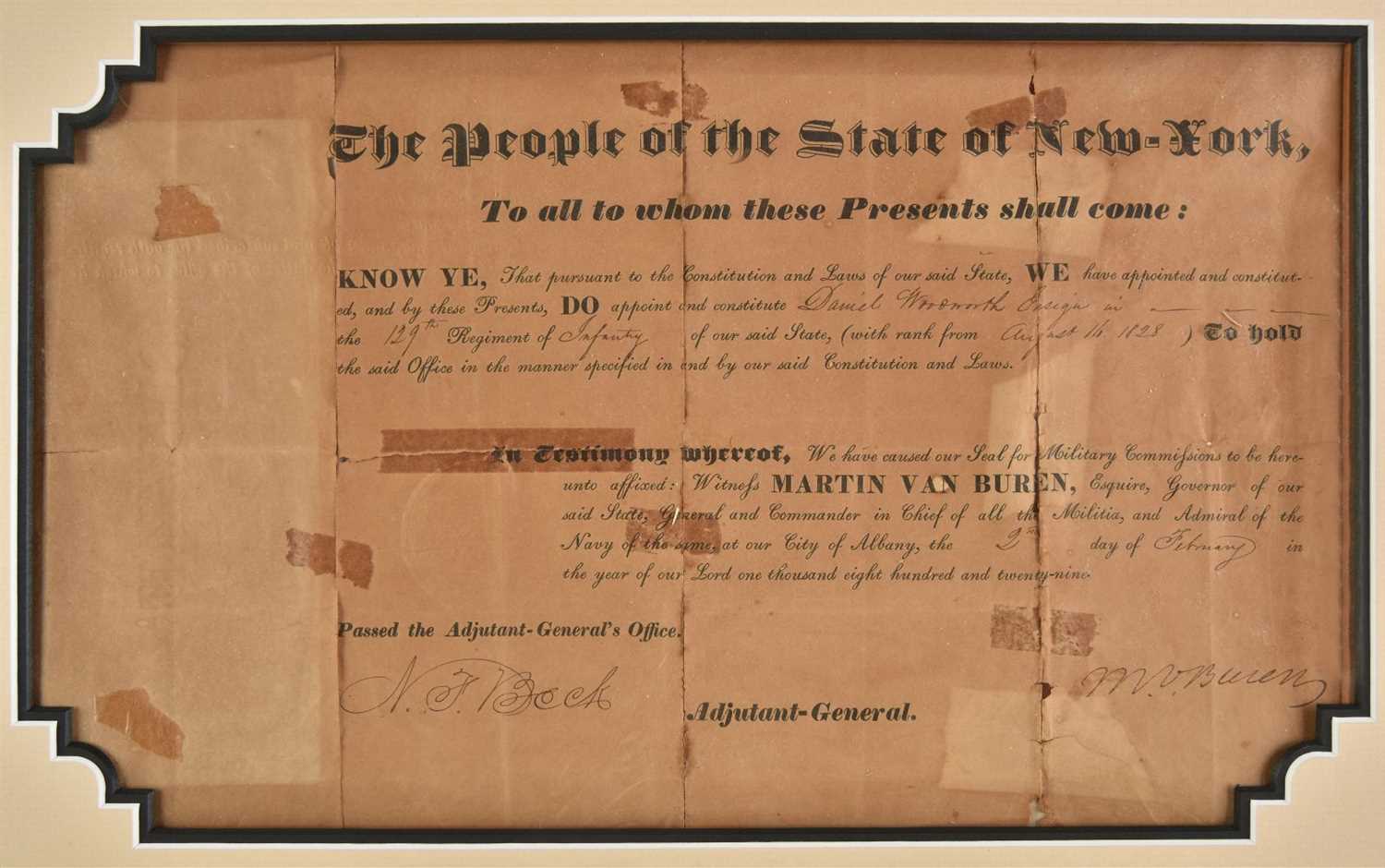
He talks about signing baseballs and any piece of paper. Birth announcements are a card sent to announce the birth of a child. (I don't know what you mean by activity.) Military commission, in this context, means document, as Sidetree said.
China's Military Leadership Undergoes Reshuffle
LVRBC says: He talks about signing baseballs and handing over any piece of paper. Birth announcements are a card sent to announce the birth of a child. (I don't know what you mean by activity.) Military commission, in this context, means document, as Sidetree said. Click to expand... Thank you very much. Nice explanation! It appears that the web browser you are using does not support some features of this site. For the best experience, we recommend using a modern browser that supports the features of this website. We recommend Google Chrome, Mozilla Firefox, or Microsoft Edge
Leadership selection within China's military has long been regarded as a negative aspect of Chinese politics. That is why the Central Military Commission (CMC) leaders recently announced by Xi Jinping at the 20th Party Congress present a rare opportunity to examine Xi's priorities and leadership of the People's Liberation Army (PLA) over the next five years. . This policy report will examine the implications of Xi's choice of military leadership and what it may mean for the direction of China's military and security policy under Xi.
On October 22, 2022, the closing day of the 20th Party Congress, the new lineup of CMC leaders was formally announced. They are in rank order:
This line up stands out for several reasons. First, Xi is willing to break long-standing norms in order to keep the CMC team as he wishes. For example, Xi specifically broke retirement rules to let Zhang — a 72-year-old military veteran — serve another term as vice chairman (VC). PLA The standard retirement age for Someone older than Zhang served as VC, when Liu Huaqing was appointed VC at the 14th Party Congress in 1992 at the age of 76. Furthermore, He Weidong's promotion to CMC VC is unusual in that he has never previously served in the Central Committee of the Chinese Communist Party (CCP) and actually led the Eastern Theater Command (ETC) to receive a second CMC VC billet. Jumped two grades from Karan.
Lincoln, Abraham. A Document Signed As 16th President, Being A Military Commission For Albert Hartsuff
Second, Xi demonstrated loyalty and the political credibility gained through personal and family connections remains an important component for promotion. Zhang's father, Zhang Zhongxan, was a founding member of the Red Army and served alongside Xi's father, Shi Zhongxan, in the 1940s, making him one of Xi's most trusted PLA officers. General He Weidong and Admiral Miao Hua are also Xi allies, who overlapped in Fujian province in the late 1990s and early 2000s when Xi was deputy party secretary and governor. He and Xi also overlapped when Xi was Party Secretary of Zhejiang Province.
Third, Xi also indicated that combat and operational experience is important. Zhang and Liu Zhenli were two of a handful of generals who served during the Sino-Vietnam War in the late 1970s and early 1980s. The surprise appointment of General He Weidong, mentioned above, was soon promoted to the position of CMC VC, indicating that his previous operational experience as ETC commander overseeing PLA forces opposite Taiwan was valuable to Xi. .
Fourth, his recent post as ETC commander and responsibility for the Taiwan and East China Sea situations may suggest that Xi has prioritized military experience in Taiwan over other geographic areas. His appointment, along with the retention of combat veteran Zhang, may actually be a calculated move by Xi to further focus the PLA on a possible Taiwan prospect.
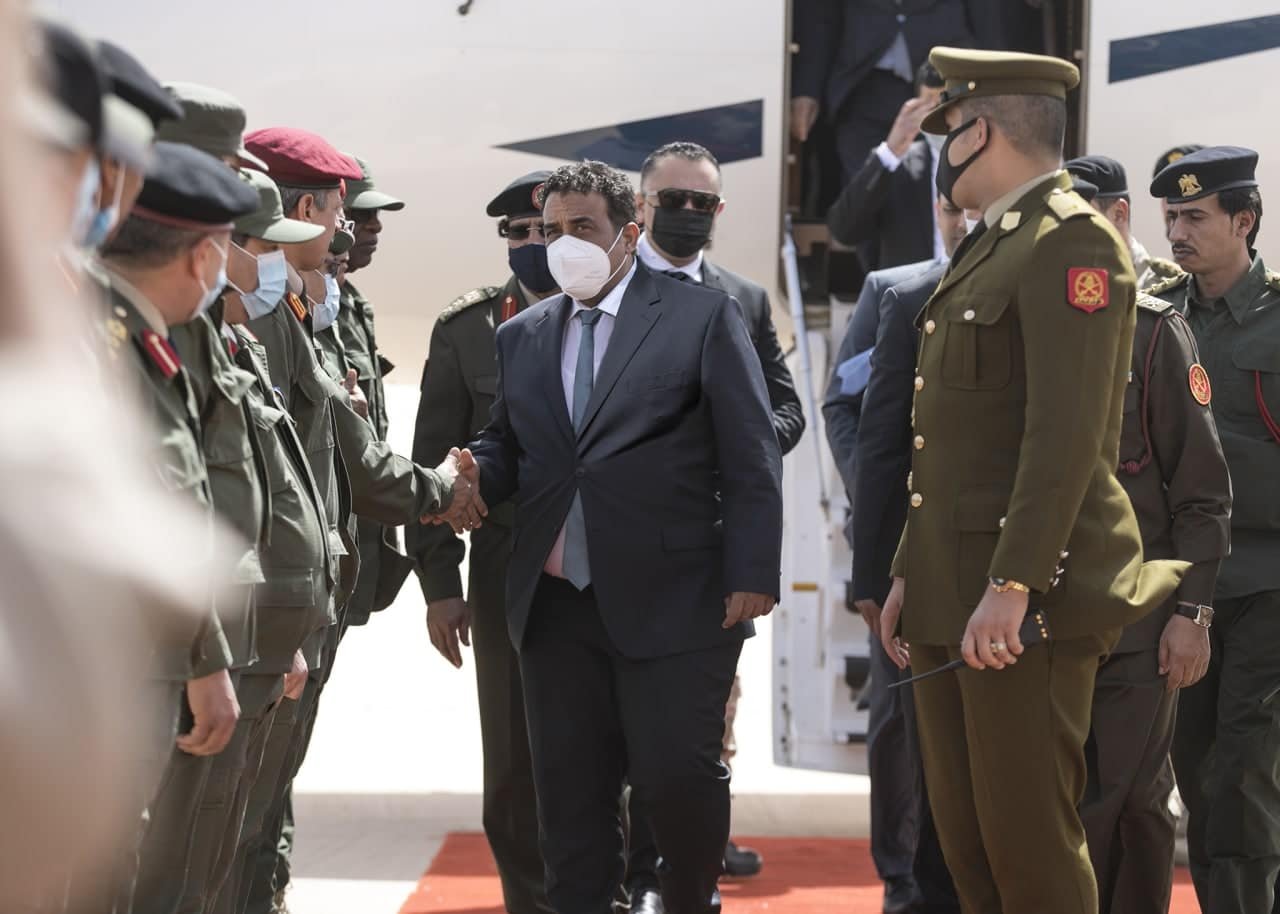
Finally, the fact that Xi did not select a civilian leader as a VC—a position that both Hu Jintao and Jiang Zemin served before taking over as CCP general secretary and CMC chairman—shows that Xi has There are no immediate plans to fix the An option. In other words, Xi's grip on power within the PLA and CMC has strengthened, with no successor in sight.
Abraham Lincoln Autograph Military Document Signed
The CMC is China's highest military command and decision-making body. Unlike the PRC's Ministry of National Defense - whose main purpose is to communicate with foreign troops and publish news about China's military - the CMC has operational oversight of China's armed forces - the People's Liberation Army - and oversees strategy, doctrine, personnel, equipment -equipment, and manages Funding and property, among other duties.
Technically, there are two CMCs – a political organization within the CCP, and an administrative organ within the PRC government. For practical purposes, however, they are treated as the same in the PRC bureaucracy.
The CMC commands the major services – the Army, Navy, Air Force, and Rocket Force, as well as the Strategic Support Force (which oversees cyber and space) and the Joint Logistics Support Force. It also oversees five joint theater commands (map below), manages 15 functional departments, such as the Joint Staff Department, General Office, Logistics Support, Equipment Development, and Political Operations Department, and various PLA research institutes. and manages academies.
The Chairman of the CMC – Xi Jinping – simultaneously serves as the General Secretary of the CCP and the President of the PRC. In addition to the chairman, there are two vice-chairmen who are the military leaders of the CMC, as well as four other members who are in charge of specific functions of the CMC such as political work or discipline and inspection. Together, these six members and the chairman form the nucleus of military operations and administration in China.
Central Military Commission
Section six provides a brief sketch of the new CMC members' biographies, backgrounds and relationship with Xi Jinping. Note that while the two roles of Vice Chairman have been announced, the titles of the other four CMC members have not been confirmed. However, they are expected to perform this duty.
Zhang is a senior CMC veteran and a close confidant of Xi Jinping. Xi's choice of Zhang to take over as the CMC's first VC is not surprising, given Zhang's experience in the CMC bureaucracy. He is also a decorated combat veteran of the Sino-Vietnam War, which makes him highly respected among the senior leadership of the PLA and CCP.
Born in Beijing in July 1950, Zhang joined the army in 1968. He was first assigned to the 14th Army Group in Kunming, Yunnan. As a company commander at the age of 26, he served in the Sino-Vietnamese War border conflict in the 1980s, and fought in the "Two Mountains Border War of Laoshan" (两山战役) in 1984.
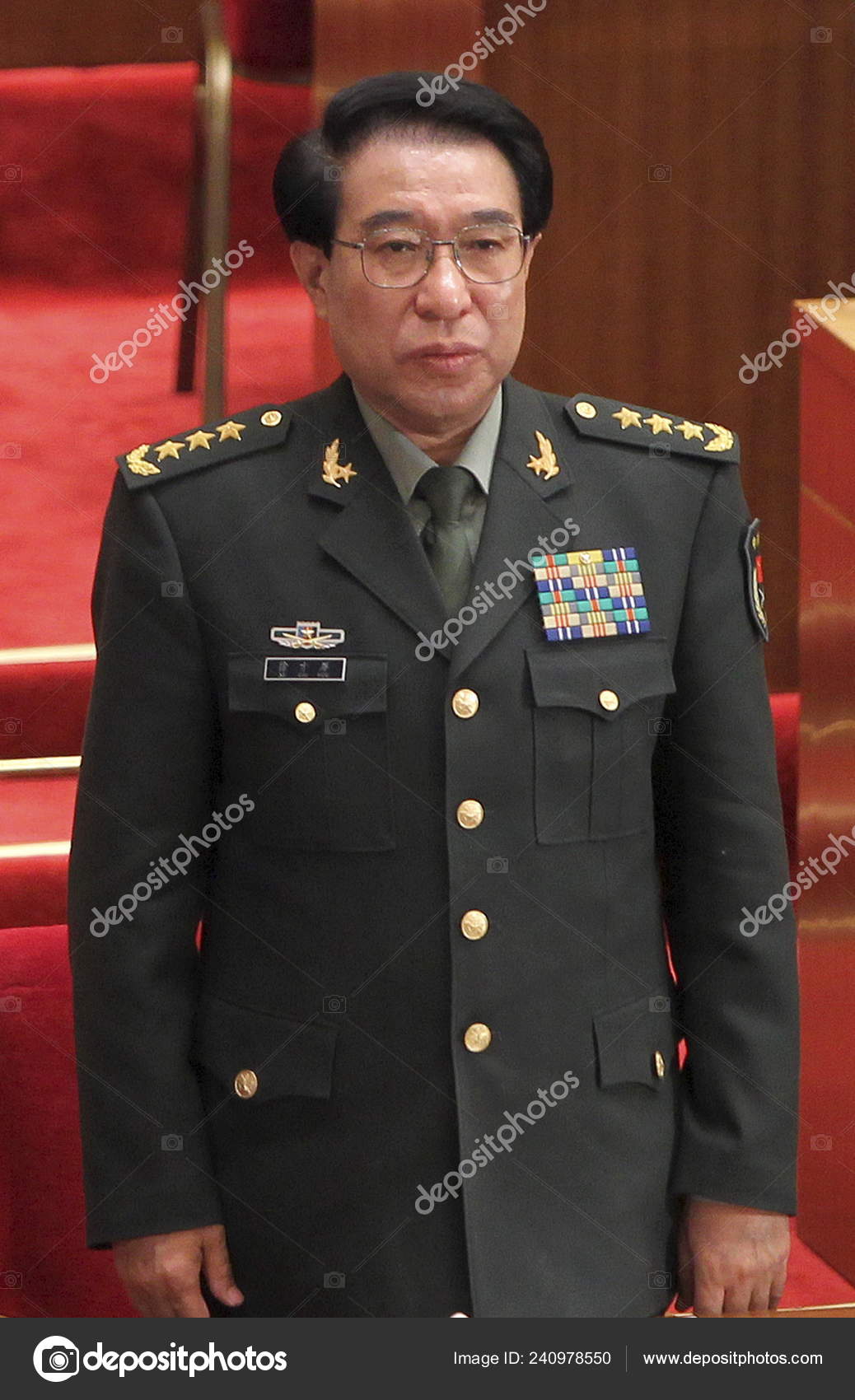
Zhang's combat experience led him to the PLA. In August 2000, he was appointed commander of the 13th Group Army (GA). In December 2005, he became the deputy commander of the Beijing Military Region (MR). In September 2007 he was promoted to commander of the Shenyang MR. He rose to the rank of Major General in 1997 and Lieutenant General in 2007. In July 2011, at the age of 61, he was promoted to General. Xi tapped Zhang to replace Chang Wenquan. Re-elected in 2012 as Director of the PLA General Armaments Department (GAD), and then as a member of the CCP Central Committee. In 2016, he took over as Head of Equipment Development at CMC. In October 2017, Zhang was appointed the second VC of CMC.
Chinese General Caihou Vice Chairman Central Military Commission China Attends
Zhang PLA is one of two common "father-son" pairings, his father being Zhang Zhongxun, a pioneering PLA general who participated with Mao in the 1927 Autumn Harvest Uprising (秋收起义). In 1947, the elder Zhang took command of the PLA's Northeast Army Corps, when Xi's father, Shi Zhongxan, was its political commissar. Both Shi and Zhang have ties to Weinan, Shaanxi. Because of their close relationship with the people and their status as second-generation Red Army princes, Zhang Xi is likely to be one of the closest military allies.
He is the surprise choice as Weidong CMC's second VC. The general has been a career army officer and has been on the fast track to promotion since Xi took over. While he has extensive work experience, he has never served in the CMC or the CCP Central Committee. Therefore, his growth
Post A Comment:
0 comments so far,add yours